
Advanced Hepatitis B Patient Recovers Well After Successful Liver Transplant at Max Super Speciality Hospital, Lucknow
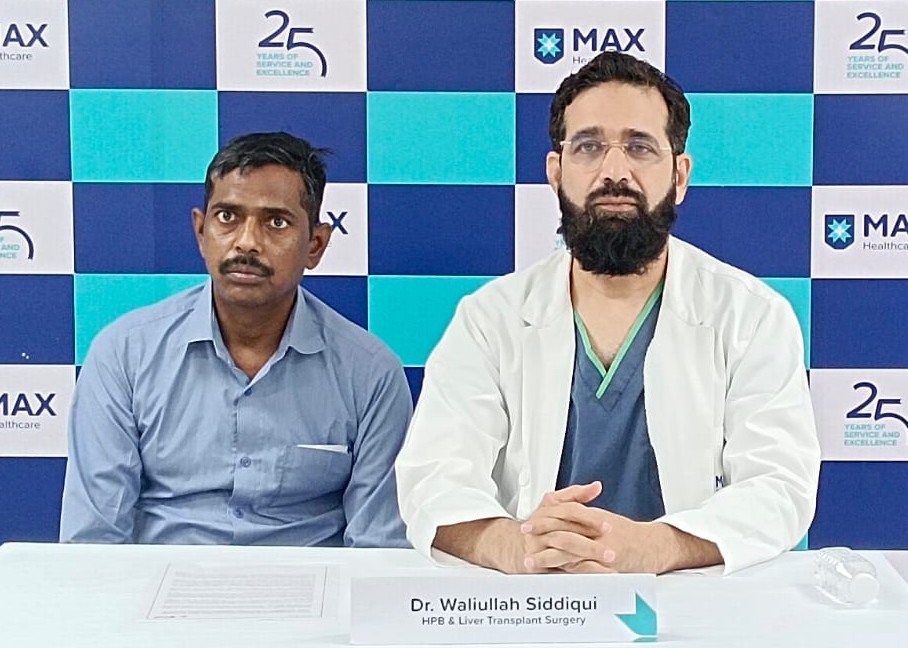
Lucknow: Reinforcing the life-saving potential of advanced liver transplant care, doctors at Max Super Speciality Hospital, Lucknow, have successfully performed a living donor liver transplant on a 36-year-old patient suffering from end-stage liver disease caused by chronic Hepatitis B infection.
Abrar Rinku Ali, a resident of Barabanki, was diagnosed three months ago with decompensated chronic liver disease caused by Hepatitis B infection, complicated by portal hypertension. The condition led to upper gastrointestinal bleeding, which required medical treatment and endoscopic intervention. However, despite receiving treatment in his hometown, his health continued to deteriorate.
Seeking advanced care, Abrar's family consulted Dr. Waliullah Siddiqui, Director, Hepato-Pancreato-Biliary & Liver Transplant Surgery, at Max Super Speciality Hospital, Lucknow. As the disease progressed, the multidisciplinary team recommended a living donor liver transplant as the most effective treatment option.
A comprehensive pre-transplant evaluation revealed extensive abnormally enlarged veins around the stomach, liver, and spleen, indicating advanced portal hypertension associated with severe chronic liver disease.
The patient subsequently underwent a successful living donor liver transplant using the right lobe of his sister's liver. Approximately 53% of the donor's liver volume was transplanted. The surgery was completed successfully, and both the donor and the recipient recovered well.
Speaking about the case, Dr. Waliullah Siddiqui, Director – Hepato-Pancreato-Biliary & Liver Transplant Surgery, Max Super Speciality Hospital, Lucknow, said, "Hepatitis B can progressively damage the liver and, if not diagnosed and managed appropriately, may eventually lead to life-threatening complications. In this case, timely evaluation and a multidisciplinary approach helped us identify liver transplantation as the most appropriate treatment option. The patient has recovered well, the transplanted liver is functioning effectively, and he is experiencing a significant improvement in his quality of life."
On the occasion of World Hepatitis Day, specialists at Max Super Speciality Hospital, Lucknow, emphasized that early diagnosis, regular monitoring, and appropriate antiviral treatment can help prevent the progression of Hepatitis B-related liver disease. For patients who develop irreversible liver failure, liver transplantation offers the possibility of long-term survival and a substantially improved quality of life.