
Digital India BHASHINI Hosts 'BHASHINI Rajyam Workshop: Lucknow Chapter' to Promote Language-First Digital Governance in Uttar Pradesh
Digital India BHASHINI Hosts 'BHASHINI Rajyam Workshop: Lucknow Chapter' to Promote Language-First Digital Governance in Uttar Pradesh
 
The workshop focused on showcasing AI-powered language technologies and highlighting their potential to drive language-first governance, accelerate multilingual digital transformation, and make government services more accessible, inclusive, and citizen-centric across Uttar Pradesh.  The event was attended by Uttar Pradesh IT Minister Sunil Kumar Sharma, Principal Secretary (IT & Electronics) Alok Kumar, UPDESCO Managing Director Sameer Verma, along with senior government officials, representatives from academia, startups, technology partners, and AI experts.  Focus on Multilingual Digital Public Infrastructure  Welcoming the participants, UPDESCO Managing Director Sameer Verma underlined the importance of multilingual technologies in strengthening citizen-centric governance and accelerating Uttar Pradesh's digital transformation.  The workshop presented BHASHINI's vision of creating a Language-First Digital Public Infrastructure (DPI), ensuring that language no longer acts as a barrier to governance, innovation, or citizen participation.  Participants were introduced to BHASHINI's AI capabilities, including:  Automatic Speech Recognition (ASR) Neural Machine Translation (NMT) Text-to-Speech (TTS) Optical Character Recognition (OCR) Transliteration Language Identification Multilingual APIs  These technologies demonstrated how AI can be integrated into government platforms and public services to improve accessibility and efficiency.  Live Demonstrations and Departmental Use Cases  The BHASHINI team conducted live demonstrations showcasing speech recognition, multilingual translation, document processing, and voice-enabled applications.  Government officials explored practical AI use cases across various departments and discussed integrating multilingual technologies into public service delivery to improve citizen access throughout the state.  Sessions also covered:  The BHASHINI Mitra partnership programme National Hub for Language Technology (NHLT) Department-specific multilingual AI applications Developer APIs Research collaborations Innovation programmes  An interactive question-and-answer session enabled officials to discuss implementation strategies and department-specific requirements with the BHASHINI team.  Uttar Pradesh Committed to Inclusive Digital Governance  Speaking at the event, Amitabh Nag, CEO of the Digital India BHASHINI Division, said Uttar Pradesh has emerged as a major destination for investment, manufacturing, Global Capability Centres (GCCs), startups, and technology innovation. He stressed that language should never become a barrier to opportunity and reiterated BHASHINI's mission of empowering every citizen through multilingual AI.  IT Minister Sunil Kumar Sharma said Uttar Pradesh is committed to building a digitally empowered and inclusive future where technology reaches every citizen, regardless of the language they speak. He noted that initiatives like BHASHINI are helping make digital governance more accessible by enabling citizens to interact with government services in their preferred language.  Principal Secretary Alok Kumar said language AI has the potential to transform public service delivery by enabling inclusive, intelligent, and citizen-first governance. He added that collaboration with BHASHINI would support the state's AI Mission, strengthen the startup ecosystem, and facilitate the integration of multilingual AI across government departments through the UP AI Stack.  Strengthening Collaboration for Future Innovation  UPDESCO Managing Director Sameer Verma described the workshop as an important platform for bringing together government departments, startups, technology partners, and academia to explore practical multilingual AI applications and develop innovative language-first governance solutions.  Reiterating BHASHINI's vision, CEO Amitabh Nag said, "Knowledge has no language. Innovation is not limited by language, and talent should never be constrained by linguistic barriers. BHASHINI aims to ensure every citizen can access AI-powered digital public services in the language they understand best."  About BHASHINI  The Digital India BHASHINI Division (DIBD), under the Digital India Corporation and MeitY, serves as India's national platform for AI-powered multilingual digital inclusion.  Currently, BHASHINI:  Powers more than 800 government websites Has enabled over 9 billion cumulative AI inferences Processes over 24 million AI inferences every day Supports 36 Indian text languages Supports 23 Indian voice languages Supports 35 international languages  The initiative continues to strengthen India's Digital Public Infrastructure by making government services more accessible through advanced language AI technologies.
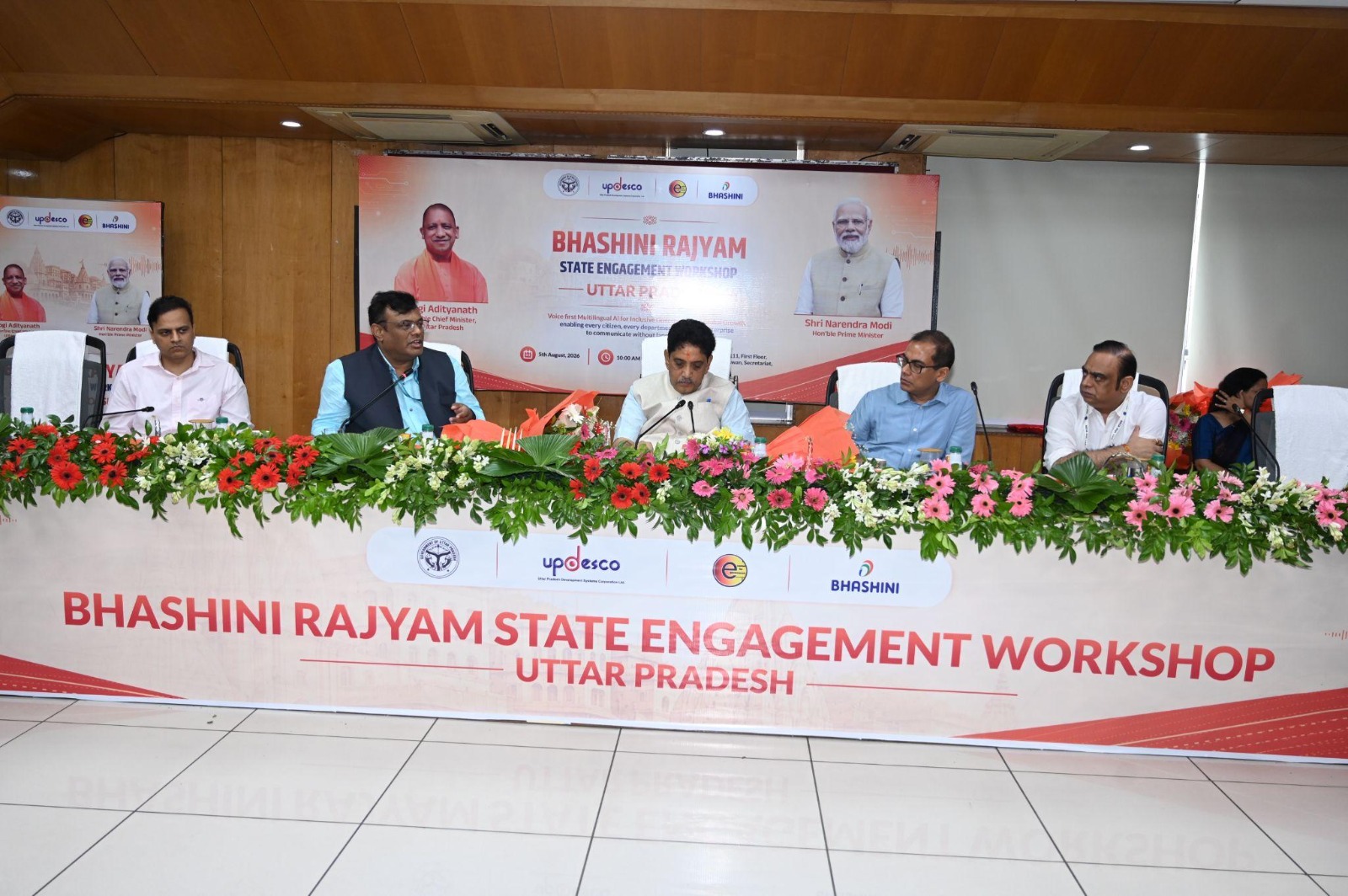
Lucknow: The Digital India BHASHINI Division (DIBD), operating under the Digital India Corporation (DIC) of the Ministry of Electronics and Information Technology (MeitY), Government of India, organised the BHASHINI Rajyam Workshop: Lucknow Chapter in collaboration with the Department of Information Technology & Electronics, Government of Uttar Pradesh.

The workshop focused on showcasing AI-powered language technologies and highlighting their potential to drive language-first governance, accelerate multilingual digital transformation, and make government services more accessible, inclusive, and citizen-centric across Uttar Pradesh.

The event was attended by Uttar Pradesh IT Minister Sunil Kumar Sharma, Principal Secretary (IT & Electronics) Alok Kumar, UPDESCO Managing Director Sameer Verma, along with senior government officials, representatives from academia, startups, technology partners, and AI experts.

Focus on Multilingual Digital Public Infrastructure

Welcoming the participants, UPDESCO Managing Director Sameer Verma underlined the importance of multilingual technologies in strengthening citizen-centric governance and accelerating Uttar Pradesh's digital transformation.

The workshop presented BHASHINI's vision of creating a Language-First Digital Public Infrastructure (DPI), ensuring that language no longer acts as a barrier to governance, innovation, or citizen participation.

Participants were introduced to BHASHINI's AI capabilities, including:

  • Automatic Speech Recognition (ASR)
  • Neural Machine Translation (NMT)
  • Text-to-Speech (TTS)
  • Optical Character Recognition (OCR)
  • Transliteration
  • Language Identification
  • Multilingual APIs

These technologies demonstrated how AI can be integrated into government platforms and public services to improve accessibility and efficiency.

Live Demonstrations and Departmental Use Cases

The BHASHINI team conducted live demonstrations showcasing speech recognition, multilingual translation, document processing, and voice-enabled applications.

Government officials explored practical AI use cases across various departments and discussed integrating multilingual technologies into public service delivery to improve citizen access throughout the state.

Sessions also covered:

  • The BHASHINI Mitra partnership programme
  • National Hub for Language Technology (NHLT)
  • Department-specific multilingual AI applications
  • Developer APIs
  • Research collaborations
  • Innovation programmes

An interactive question-and-answer session enabled officials to discuss implementation strategies and department-specific requirements with the BHASHINI team.

Uttar Pradesh Committed to Inclusive Digital Governance

Speaking at the event, Amitabh Nag, CEO of the Digital India BHASHINI Division, said Uttar Pradesh has emerged as a major destination for investment, manufacturing, Global Capability Centres (GCCs), startups, and technology innovation. He stressed that language should never become a barrier to opportunity and reiterated BHASHINI's mission of empowering every citizen through multilingual AI.

IT Minister Sunil Kumar Sharma said Uttar Pradesh is committed to building a digitally empowered and inclusive future where technology reaches every citizen, regardless of the language they speak. He noted that initiatives like BHASHINI are helping make digital governance more accessible by enabling citizens to interact with government services in their preferred language.

Principal Secretary Alok Kumar said language AI has the potential to transform public service delivery by enabling inclusive, intelligent, and citizen-first governance. He added that collaboration with BHASHINI would support the state's AI Mission, strengthen the startup ecosystem, and facilitate the integration of multilingual AI across government departments through the UP AI Stack.

Strengthening Collaboration for Future Innovation

UPDESCO Managing Director Sameer Verma described the workshop as an important platform for bringing together government departments, startups, technology partners, and academia to explore practical multilingual AI applications and develop innovative language-first governance solutions.

Reiterating BHASHINI's vision, CEO Amitabh Nag said, "Knowledge has no language. Innovation is not limited by language, and talent should never be constrained by linguistic barriers. BHASHINI aims to ensure every citizen can access AI-powered digital public services in the language they understand best."

About BHASHINI

The Digital India BHASHINI Division (DIBD), under the Digital India Corporation and MeitY, serves as India's national platform for AI-powered multilingual digital inclusion.

Currently, BHASHINI:

  • Powers more than 800 government websites
  • Has enabled over 9 billion cumulative AI inferences
  • Processes over 24 million AI inferences every day
  • Supports 36 Indian text languages
  • Supports 23 Indian voice languages
  • Supports 35 international languages

The initiative continues to strengthen India's Digital Public Infrastructure by making government services more accessible through advanced language AI technologies.

Tags