
One Health, One Future: International Symposium at Integral University Highlights Global Fight Against AMR
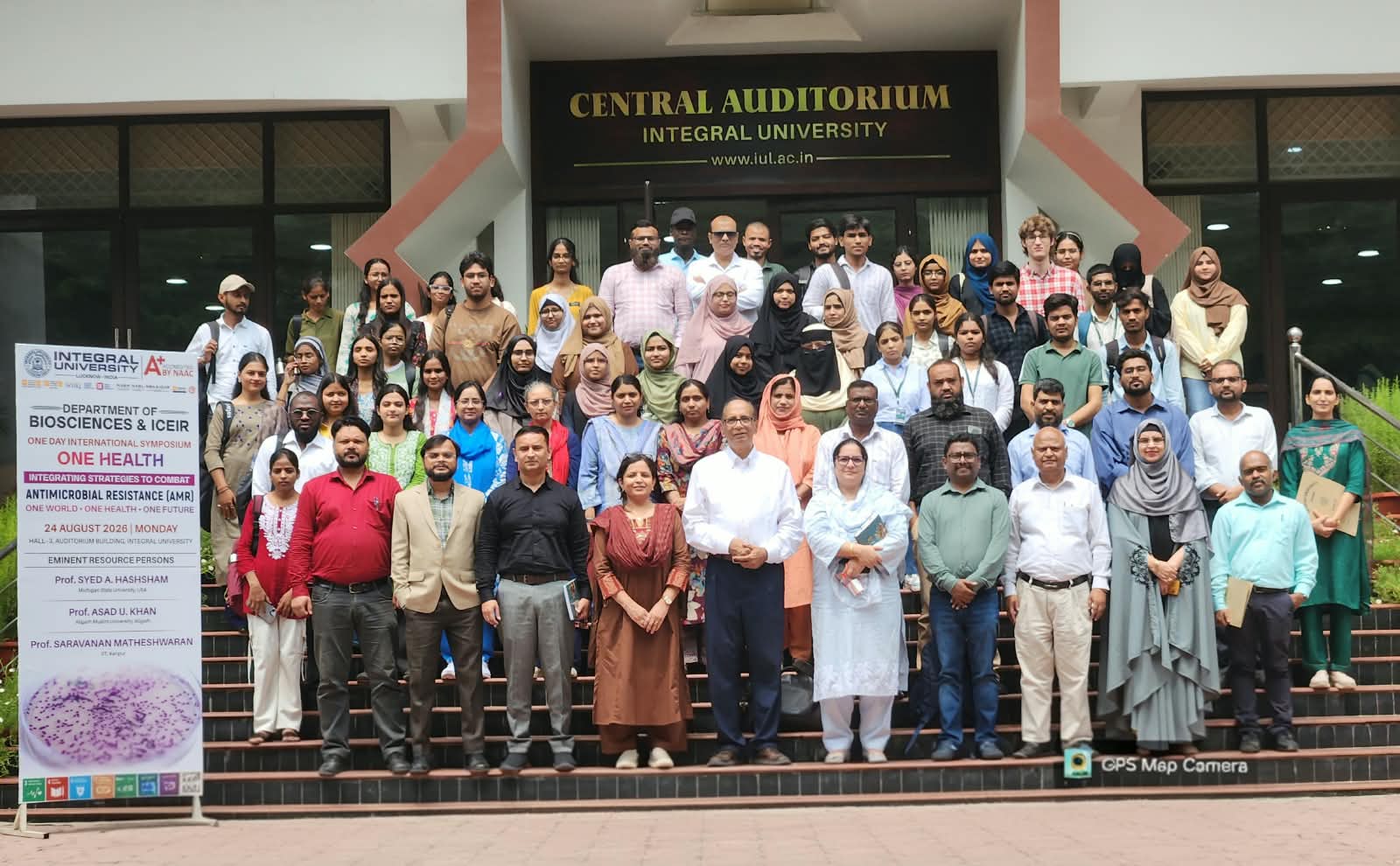
Lucknow, August 24, 2026: The Department of Biosciences and the Interdisciplinary Centre for Excellence in Interdisciplinary Research (ICEIR), Integral University, Lucknow, organized a one-day International Symposium on “One Health: Integrating Strategies to Combat Antimicrobial Resistance (AMR)”.
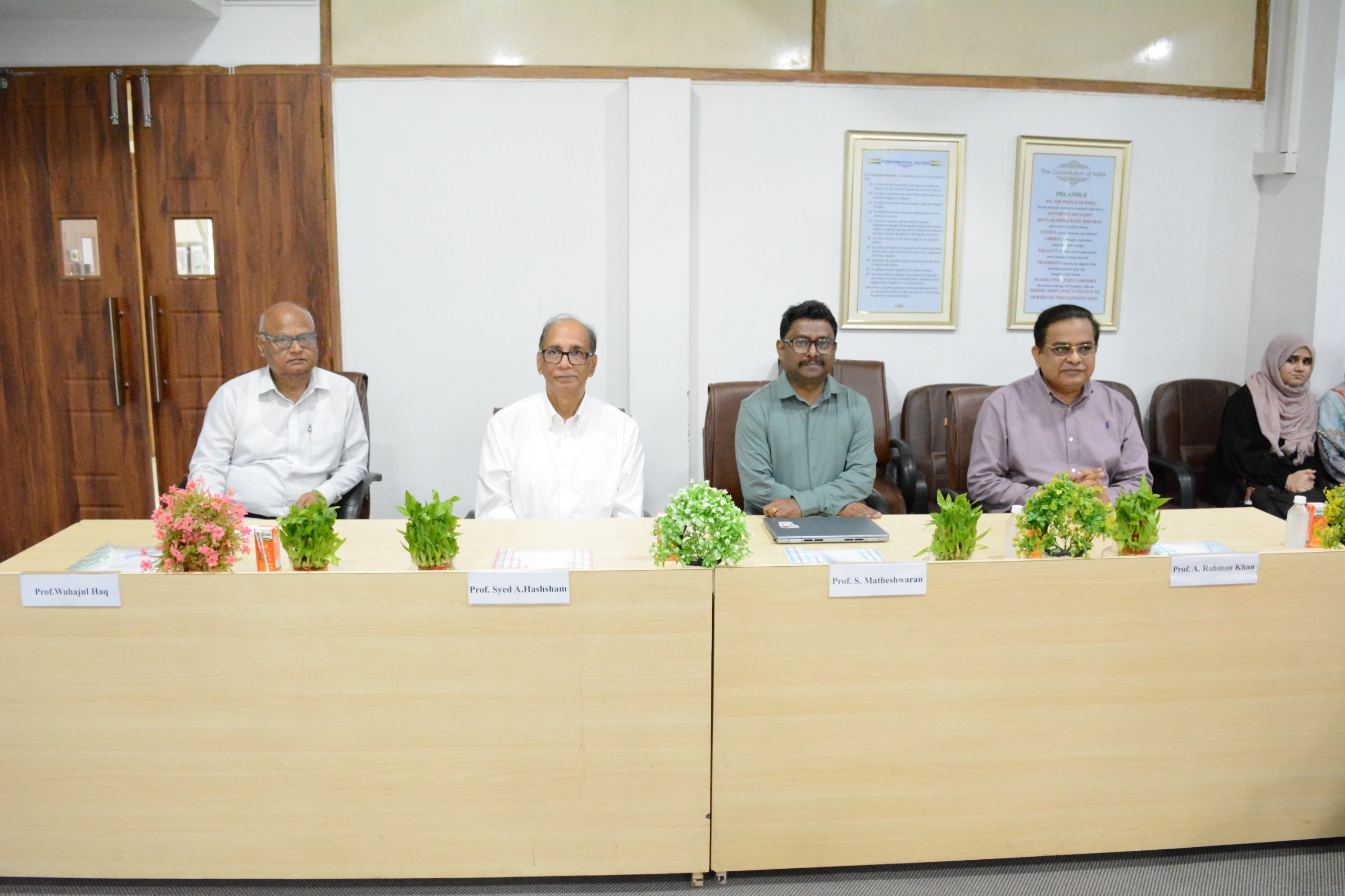
The symposium was organized under the gracious blessings and encouragement of the Hon’ble Founder and Chancellor of Integral University, Prof. Syed Waseem Akhtar. The programme began with an inaugural address by Prof. Wahaj Ul Haq, Dean, Research & Development, Integral University, who welcomed the invited speakers, distinguished guests, faculty members, researchers and students. He emphasized the need for collective and interdisciplinary efforts to address the growing global challenge of antimicrobial resistance.
The event was also graced by Prof. Abdul Rahman Khan, Dean, Faculty of Science and Controller of Examinations, who highlighted the relevance of the theme “One World, One Health, One Future” and encouraged participants to actively engage with the expert sessions.
The symposium brought together academicians, researchers, healthcare professionals and students to deliberate on antimicrobial resistance, one of the most serious public health challenges worldwide. Discussions focused on AMR from a One Health perspective, recognizing the interconnectedness of human, animal and environmental health.
Experts Share Insights on AMR
The scientific programme featured lectures by three distinguished experts. Prof. Syed A. Hashsham, Department of Civil and Environmental Engineering, Michigan State University, USA, spoke about rare microbial functions explored through metagenomics, with particular emphasis on antimicrobial resistance, reductive dehalogenases, vitamin B12 and hydrogen metabolism.
Prof. Asad U. Khan, Interdisciplinary Biotechnology Unit, Aligarh Muslim University, highlighted the shift from viewing antimicrobial resistance solely as a threat towards developing innovative approaches for infection prevention and control.
Prof. Saravanan Matheshwaran, IIT Kanpur, presented molecular and therapeutic strategies to combat drug-resistant Mycobacterium tuberculosis, focusing on approaches that target its SOS response pathway.
The symposium also provided research scholars and postgraduate students with an opportunity to present their work through engaging flash presentations. The sessions encouraged scientific dialogue, interdisciplinary collaboration and meaningful knowledge exchange among participants.
Focus on Sustainable AMR Control
The discussions emphasized several critical areas, including AMR surveillance, infection prevention and control, antimicrobial discovery, environmental aspects of antimicrobial resistance, responsible use of antibiotics and sustainable approaches to controlling drug-resistant pathogens.
Speakers and participants also stressed the importance of stronger collaboration among healthcare professionals, veterinarians, environmental scientists, researchers and policymakers. Such coordinated efforts are essential for developing effective and sustainable solutions to the growing threat of antimicrobial resistance.
The symposium also contributed to several United Nations Sustainable Development Goals (SDGs), particularly SDG 3 (Good Health and Well-being), SDG 4 (Quality Education), SDG 6 (Clean Water and Sanitation), SDG 12 (Responsible Consumption and Production), SDG 13 (Climate Action), SDG 14 (Life Below Water), SDG 15 (Life on Land) and SDG 17 (Partnerships for the Goals).
The symposium was convened by Prof. Snober S. Mir, Head, Department of Biosciences, with Dr. Shahper N. Khan and Dr. Mohd Aamir Qureshi serving as Organizing Secretaries. The programme was successfully coordinated with the collective efforts of the faculty and staff members of the Department of Biosciences.
The symposium concluded with a strong message that combating antimicrobial resistance requires sustained interdisciplinary collaboration, responsible antimicrobial use and coordinated action across human, animal and environmental health. The overarching message of the event resonated with its central theme: One World, One Health, One Future.