
Sonic Branding: The 25-Year Journey of Airtel’s 5-Note Tune That Connected a Nation Without Words
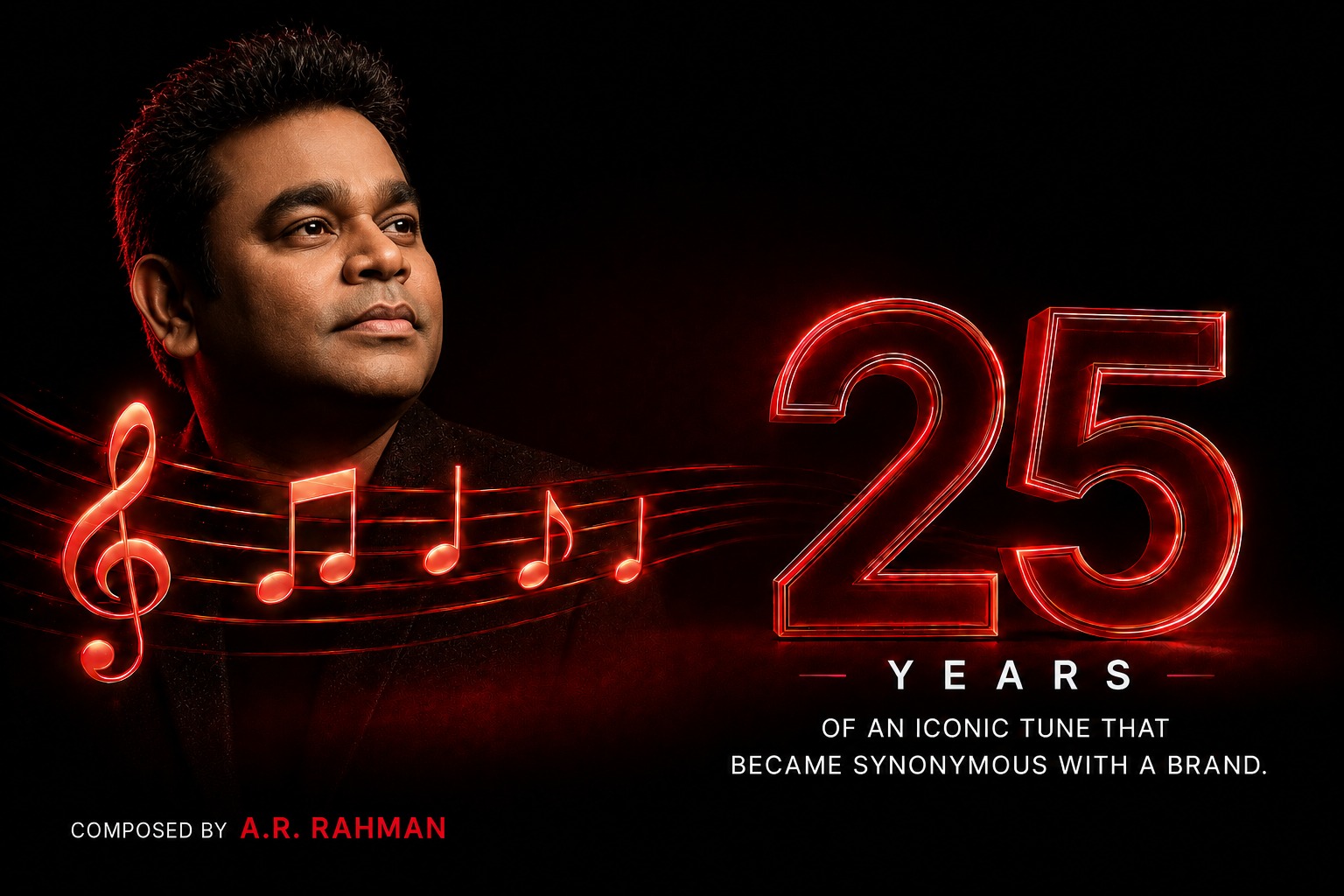
A.R. Rahman Airtel Signature Tune 25 Years: In the global world of marketing and corporate branding, there are very few assets that consumers can recognize with their eyes completely closed. No vibrant logo, no catchy tagline, and no high-profile celebrity endorsement—just a short, five-note melody.
Play it anywhere—in a chaotic airport terminal, a local neighborhood mobile shop, a quiet corporate office, or even as an impromptu rendition by a wedding band—and chances are someone will instantly smile and say, "That’s Airtel." This is the kind of pristine brand equity that marketers worldwide spend decades and millions trying to build.
In 2026, this iconic signature tune, composed by the musical maestro A.R. Rahman, officially completes 25 years of existence. Over a quarter of a century, it has achieved something incredibly rare in advertising history: it is no longer just a piece of music associated with Airtel; it has dynamically become synonymous with the brand itself.
Born at the Dawn of India's Mobile Revolution
When Airtel originally commissioned the tune, India was just standing at the threshold of its cellular revolution. The telecom giant wanted a distinct brand identity that could seamlessly transcend deep linguistic barriers, varying literacy levels, and diverse income brackets across the country. The brief given to the Oscar-winning composer was beautifully minimal: "Make something that makes India feel connected."
Instead of composing a conventional advertising jingle weighed down by lyrics, Rahman crafted a short, emotionally resonant five-note melody designed to travel the length and breadth of the country without needing a single word. It lasted only a few seconds, but those few seconds went on to become one of the most widely recognized pieces of commercial music in Indian history.
The Brilliance of What Was Left Out: Simplicity as a Strength
The absolute genius of Rahman's composition lay in its minimalism. There were no lyrics to translate into India's dozens of regional languages, no celebrity faces that would eventually age or change, and no campaign-specific messaging that would rapidly become dated. It was simple, deeply emotional, and universal.
This simplicity became its greatest weapon. The tune required no translation, no actor, and no slogan to be understood. It was versatile enough to be deployed across every consumer touchpoint—from digital recharge confirmation tones and customer care hold music to physical retail stores, massive billboards, and television commercials. In essence, it became Airtel's definitive "Audio Logo."
Soon, the melody was woven into the fabric of daily life. It greeted millions of customers daily as their caller tunes and served as the background score for an entire generation's first-ever experience with mobile technology.
Timeless Consistency in a Changing Category
While many consumers might struggle to recall Airtel's earliest ad campaigns or their shifting taglines over the years, the music remains permanently etched in public memory. This highlights the profound difference between temporary campaign recall and permanent brand memory.
What makes the Airtel tune so incredibly potent is not merely nostalgia, but its absolute consistency. While Airtel’s visual branding, corporate colors, and market positioning evolved over the decades, the core five notes stayed anchored. The track was refreshed multiple times to stay contemporary, including:
-
2013: A grand re-recording featuring world-class musicians from the prestigious Budapest Symphony Orchestra.
-
2017: A beautiful Carnatic music interpretation tailored specifically for Southern audiences.
-
Modern Eras: Newer adaptations infused with youth choirs, EDM, and regional folk instruments.
Through every single iteration, the fundamental identity of the original composition remained completely untouched.
The Power of Sonic Branding in the 5G Era
Telecom is an aggressively competitive category where brands constantly wage wars over data plans, pricing, network speeds, and coverage. These functional messages change every few months. However, a powerful Sonic Identity is built over decades. Airtel's anthem managed to remain perfectly relevant through every evolutionary phase of India's telecom journey—from the early 2G mobile era to the smartphone boom, and now into the hyper-digital 5G and AI age.
In the current digital ecosystem, where consumers are bombarded with apps, digital payments, and smart services, familiar brand assets are more valuable than ever. They provide a sense of continuity and trust in a category where everything else is in a state of constant flux.
Conclusion: Long before the term "Sonic Branding" became a standard part of modern marketing vocabulary, Airtel understood the psychological power of a distinctive brand sound. Twenty-five years later, even as technology, networks, and consumer behaviors undergo massive shifts, those iconic five notes continue to do precisely what they were created to do: they instantly connect a nation.