
Pakistan’s Nets Reveal the Plan Behind the Pause
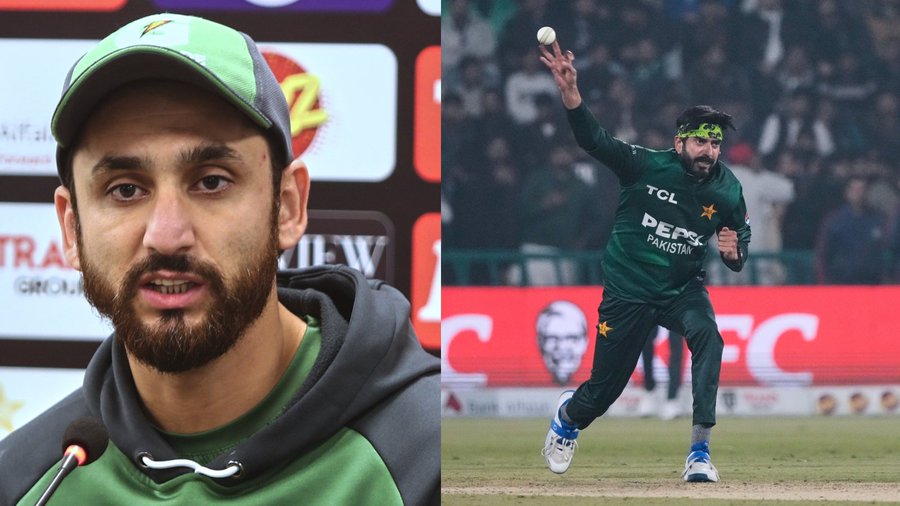
Two hours into Pakistan’s training session at R. Premadasa Stadium, a bowler paused mid-delivery stride, holding his front foot in the air before releasing the ball after an exaggerated delay. The move was so recognisable it seemed unmistakable.
Only it wasn’t Usman Tariq.
Instead, it was Naseem Shah, grinning as he rolled his arm over. With that very delivery, he beat Abrar Ahmed so comprehensively that even the net bowler—attempting to mimic the front-of-the-hand release of Varun Chakaravarthy—couldn’t suppress a smile.
For a Pakistan side that has often carried visible tension into high-stakes clashes against India, this session felt different. Shaheen Shah Afridi, after bowling at full tilt for close to an hour, casually switched to left-arm orthodox. Babar Azam worked up a sweat during his own bowling stint.
Then the mimicry began.
Shaheen tried his version of Tariq’s delayed action, but it was Naseem who sold it best—twisting his entire body and amplifying the drama with every ball. It was playful, but not pointless. Because Usman Tariq looms large in Pakistan’s plans for Sunday, February 15.
“We wanted to give Tariq a game,” captain Salman Agha had said after Pakistan’s previous match against the USA. “He’s a match-winner and a trump card for us.” Friday’s session suggested that faith runs deep.
The tall off-spinner—with his delayed action, round-arm release, and subtle variations in pace and angle—is being positioned as Pakistan’s chief disruptor against India’s left-hand-heavy batting line-up. He bowled an extended spell on match-minus-two day, primarily to Fakhar Zaman, Sahibzada Farhan, and Saim Ayub.
By the time India arrived in Colombo after a long day navigating travel and immigration, Pakistan had already wrapped up. Though in the city for several days, both of their earlier matches were played at the SSC. This was their first full training session under lights at Premadasa—and their only opportunity to rehearse here before match day. All 15 squad members were present.
The evening began with a team huddle. Head coach Mike Hesson spoke animatedly before the players split into structured drills. Net bowlers were instructed to replicate Axar Patel’s left-arm angle and Chakaravarthy’s leg-break–googly combination.
Salman Mirza, who made way for Tariq in the XI, bowled a long spell under the watchful eye of bowling coach Ashley Noffke. There were extended, intense conversations between Hesson and Salman—quiet, deliberate, and away from the cameras.
Saim Ayub’s work was technical. A blue patch was marked on a good-length area using cones, and he was repeatedly asked to hit it. At times, coaches gestured with a bat, tracing the hitting arc of India’s left-handers—an unmistakable nod to past damage in this rivalry.
As darkness settled in, the drills sharpened. Babar and Naseem practiced high catches in the deep with tennis balls, tracking them against the floodlights. Abrar drilled run-outs, aiming for a single stump in one fluid motion. Shaheen and Abrar unfurled big hits, while Faheem Ashraf—Player of the Match in the opener—earned a pat on the back after nailing a yorker.
Hovering over all preparations is the weather. Sri Lanka’s Meteorology Department has warned of a possible low-pressure system forming around February 15, advising the public to monitor forecasts closely.There may be uncertainty in the skies, but inside the nets the signals were clear.
Long after the drills ended and the laughter faded at Premadasa, it was that exaggerated pause in the delivery stride that lingered. Not because Naseem mimicked it so well—but because everyone knew whose action he was borrowing.
For all the theatre, the message was unmistakable.Pakistan can joke about Usman Tariq’s delay. They can imitate the flourish and stretch the hang-time for effect. But come Sunday, they will be counting on the real thing. The pause, then, will no longer be a punchline.